
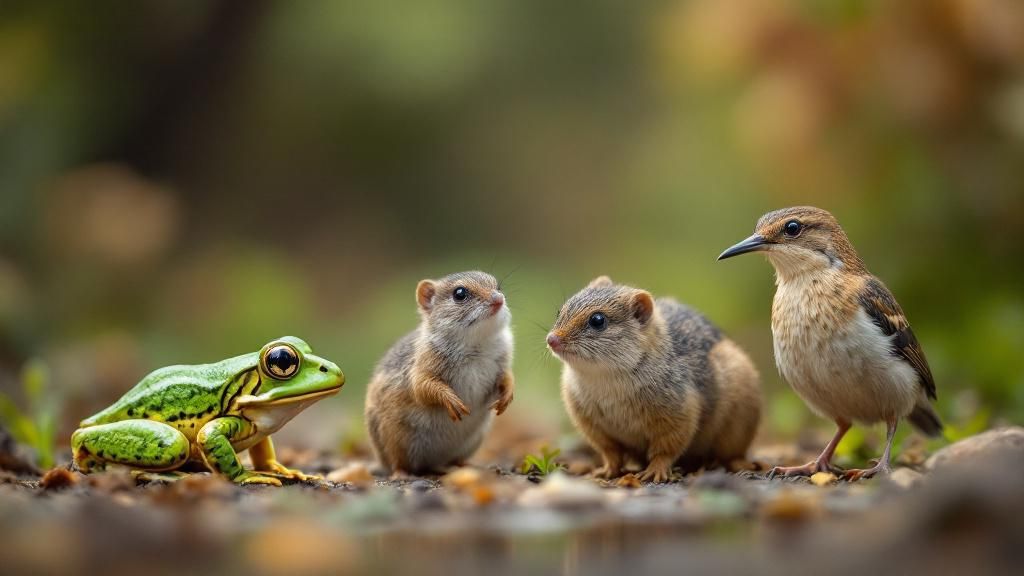
From a small jade frog discovered deep in the Amazon rainforest in Peru to a troubled humpback whale beached in the Baltic waters, nature keeps on amazing and test us in equal measure. This week’s animal stories span the globe, recording both heartwarming rescues and sobering reminders of the vulnerability of our world of nature. A juvenile fox cub left in Glasgow has found refuge at a Scottish wildlife centre, whilst conservation experts in Uganda celebrate the successful translocation of rhinoceroses—a species that had been hunted to extinction in the country just four decades earlier. Alongside these tales of human intervention and animal resilience, remarkable creatures carry on with their routines: birds constructing nests, migratory species seeking shelter, and predators hunting for their next food source. Collectively, these snapshots reveal the intricate web of life that surrounds us.
Impressive Revelations in the Natural World
Scientists working in the Peruvian Amazon have identified a striking new species of frog that challenges our knowledge of amphibian diversity in the world’s most biodiverse region. Gastrotheca mittaliiti, spanning slightly more than an inch in length, displays an captivating shade of green that allows it to blend seamlessly into its rainforest habitat. What truly sets this miniature creature apart, however, is its extraordinary reproductive strategy: the female carries her eggs in a natural pouch on her back, much like a marsupial mammal. This discovery highlights the remarkable evolutionary adjustments that evolution has produced in response to the pressures and opportunities of the Amazon ecosystem.
Meanwhile, environmental programmes internationally are producing positive outcomes for species facing extinction. Uganda’s rhino population, which was entirely eliminated in the wild by 1983, is now making a remarkable comeback thanks to a dedicated breeding programme at the Ziwa sanctuary. Rangers have commenced moving these precious animals to secure habitats in other parts of the country, progressively re-establishing populations to protected national parks. Such achievements show that with sufficient commitment and resources, humanity can undo severe declines and give reassurance to species hovering on the brink of extinction.
- New frog species found in Peruvian Amazon with distinctive egg-carrying pouch adaptation
- Uganda’s extinct rhino population undergoing restoration through sanctuary breeding and translocation efforts
- Endangered species conservation programmes demonstrating tangible progress across multiple continents
- Scientific research continues to reveal undocumented biodiversity in rainforests of the tropics
Conservation Initiatives Yielding Success Throughout the World
From the savannas of East Africa to the windswept islands of Scotland, conservation initiatives are delivering tangible results for wildlife populations that faced uncertain futures. These achievements reflect decades of committed effort by biologists, rangers and local communities who have rejected the notion of extinction as unavoidable. Whether through carefully managed breeding programmes or targeted removal of invasive species, the point is evident: with adequate dedication and technical knowledge, humanity can undo ecological harm and reestablish natural equilibrium. These victories, though hard-won, offer encouragement for environmental professionals striving to safeguard the Earth’s surviving biodiversity.
The breadth and range of these undertakings demonstrate a significant change in how we approach wildlife management. Rather than treating conservation as a losing battle against daunting obstacles, practitioners more and more embrace data-driven methods that deliver measurable results. Relocation initiatives, invasive species removal, and habitat restoration have all demonstrated success when implemented with thoroughness and commitment. These accomplishments are not merely scientific achievements; they reflect a dedication to coming generations, making certain that species we nearly lost will prosper in the wild for generations ahead.
Uganda’s Rhinoceros Translocation Scheme
Uganda’s rhinoceros population demonstrates one of the most remarkable conservation turnarounds. After the last wild rhino was killed in 1983, the species appeared irretrievably lost from the nation’s natural habitats. However, the Ziwa rhino sanctuary established a breeding initiative that has successfully reconstructed the population from the brink of extinction. Today, rangers are carefully relocating these animals to designated reserves throughout the country, such as Kidepo Valley national park in the north, methodically reintroducing rhinos to their ancestral ranges.
The movement operation requires meticulous planning and expertise to ensure the animals’ health during transport and their effective establishment into new environments. Each rhino must be carefully prepared and tracked during the journey, with specialists assessing their health and readiness. By dispersing the herds across multiple conservation zones, conservationists reduce the risk of catastrophic loss from disease or poaching whilst simultaneously restoring habitats that have been without these magnificent creatures for four decades.
Orkney’s Native Vole Recovery
The isolated Orkney archipelago along Scotland’s north coast has witnessed a silent environmental success as native vole populations bounce back after rigorous programmes to manage non-native stoats. These carnivorous creatures, introduced to the islands decades ago, wreaked havoc on the native vole numbers, endangering the fragile equilibrium of Orkney’s unique ecosystem. Focused eradication initiatives have significantly reduced the stoat population, allowing voles to flourish anew in the island gardens and grasslands, where they are frequently observed searching through the vegetation.
The restoration of Orkney’s voles demonstrates how strategic action can rebuild ecological relationships disrupted by human activity. By removing the non-native predators that were never part of the islands’ native wildlife, conservation experts have enabled native species to reclaim their ecological niches. This success story illustrates the importance of comprehending how introduced species impact island ecosystems and the tangible benefits that result when such invasions are undone, offering important insights for conservation initiatives worldwide.
Loss and Recovery in Ocean Ecosystems
The waters off northern Germany recently became the focus of an international rescue effort when a humpback whale, affectionately nicknamed Timmy, became stranded near Lübeck in the Baltic Sea. Marine biologists believe the whale had inadvertently swum into the shallow areas of the Baltic, a directional miscalculation that proved tragically fatal. Despite early refloating efforts by devoted rescue workers, Timmy stayed too weak and disoriented to make its way back to the North Sea, where deeper ocean areas and open ocean would provide the animal with a genuine chance of survival and return to its natural migration patterns.
In the end, rescuers chose to cease their efforts, recognising that Timmy’s state had deteriorated beyond recovery. This heartbreaking outcome underscores the challenges faced by marine mammals in an increasingly complex ocean environment, where shipping lanes, fluctuating ocean temperatures, and navigational confusion present significant dangers to these remarkable creatures. Whilst rescue efforts for single animals capture public imagination and demonstrate humanity’s compassion for wildlife, they also reveal the wider environmental issues facing whales and the significance of safeguarding their natural habitats and migration corridors from human interference and climate-related disruption.
- Humpback whale stranded in the Baltic after unintended navigational mistake into shallow waters
- Initial refloating efforts unsuccessful due to whale’s severe weakness and disorientation
- Case highlights wider dangers to marine mammals from human activity and environmental change
Striking Animal Behaviour Captured Across the Globe
From the vibrant streets of Indian cities to the peaceful wetlands of Central America, wildlife continues to demonstrate striking adaptability and ingenuity in traversing human-dominated landscapes. A rose-ringed parakeet in Prayagraj was not long ago spotted absconding with wheat ears, exemplifying how urban bird populations have adapted to exploit alternative food sources in densely inhabited areas. Meanwhile, a caiman in Panama City’s suburban wetlands showcases nature’s resilience, thriving in confined patches of habitat squeezed between residential developments. These observations reveal that despite habitat loss and urbanisation, animals exhibit extraordinary behavioural flexibility, securing nourishment and shelter in unexpected places and reminding us that wildlife persists in the margins of human civilisation.
Equally captivating are the seasonal patterns and nesting behaviours found in diverse ecosystems. In Seattle, a female house finch demonstrated maternal dedication by carrying twigs to build her nest within a residential home’s ventilation system, illustrating how some species have successfully integrated into human structures. Meanwhile, white pelicans congregated at Lake Çavuşçu in Turkey, converting the refilled water body into a crucial stopover point for travelling birds dealing with drought-induced hardship. These snapshots of animal behaviour underscore the interconnectedness of wildlife with environmental conditions and human spaces, revealing complex survival mechanisms that adapt to changing circumstances and opportunities.
| Location | Notable Behaviour |
|---|---|
| Prayagraj, India | Rose-ringed parakeet foraging for wheat ears in urban environment |
| Seattle, Washington, USA | Female house finch nesting inside residential home ventilation vent |
| Albrook, Panama City | Caiman thriving in small suburban wetland habitat |
| Lake Çavuşçu, Turkey | White pelicans using refilled lake as migratory stopover point |
| Alkmaar, Netherlands | Gull opportunistically targeting transported cheese at seasonal market |
Sperm Whale Birth Assistance Advancement
Recent scientific observations have documented extraordinary examples of sperm whales helping with the birth process of their group companions, representing a major advancement in grasping cetacean community dynamics and maternal care. These impressive demonstrations of collaborative action demonstrate that whales exhibit sophisticated emotional intelligence and social connections far more substantial than once believed by marine biologists. The assistance provided during labour suggests complex communication systems and understanding behaviours within whale populations, contradicting earlier beliefs regarding the isolated aspects of cetacean reproduction and underscoring the complex social structures that shape whale societies.
This finding carries substantial implications for ocean protection initiatives, as it demonstrates the vital role of protecting entire whale pods rather than prioritising only individual animals. Understanding these sophisticated social relationships reveals that fragmenting social bonds through commercial whaling, maritime collisions, or environmental degradation has far-reaching effects beyond direct survival outcomes. The ability of whales to support vulnerable members during essential developmental periods emphasises the necessity of maintaining family groups and supporting instinctive behavioural expression, ultimately strengthening population resilience and long-term species survival in progressively hostile aquatic habitats.
Urban Wildlife and Seasonal Spectacles
As human settlements spread across the globe, wildlife increasingly adjusts to urban environments, generating unexpected encounters between nature and city life. From a female house finch carefully constructing her nest inside a residential ventilation vent in Seattle to a caiman thriving in a modest wetland tucked behind suburban streets in Panama City, these animals display remarkable resilience and ingenuity. Similarly, a young fox cub abandoned in Glasgow’s bushes was rescued by the Scottish SPCA and is now recovering at their National Wildlife Rescue Centre, highlighting how urban communities contribute significantly in wildlife protection and rehabilitation efforts.
Seasonal transitions bring their own wonders to both untouched and human-modified landscapes. In the Netherlands, gulls readily pursue cheese at Alkmaar’s opening market, whilst in Turkey, flamingos and rose-ringed parakeets exhibit their vibrant plumage at seasonal congregation sites. Perhaps most tellingly, Lake Çavuşçu in Turkey has become a key stopover point for white pelicans following its replenishment following the drought, illustrating how ecological renewal can bring back habitats for birds in transit. These instances tell us that wildlife keeps flourishing, adapting, and thriving within the complex mosaic of contemporary landscapes.
- Fox cub rescued in Glasgow undergoes specialised treatment and recovery support at animal sanctuary
- House finch builds nest inside home ventilation system in Seattle
- Caiman population thrives in modest wetland area within Panama City suburbs
- White pelicans use refilled Turkish lake as vital stopover location
- Gulls and parakeets take advantage of seasonal feeding opportunities in European and Asian areas
